
Latest News
Shubman Gill defends India's follow-on plan
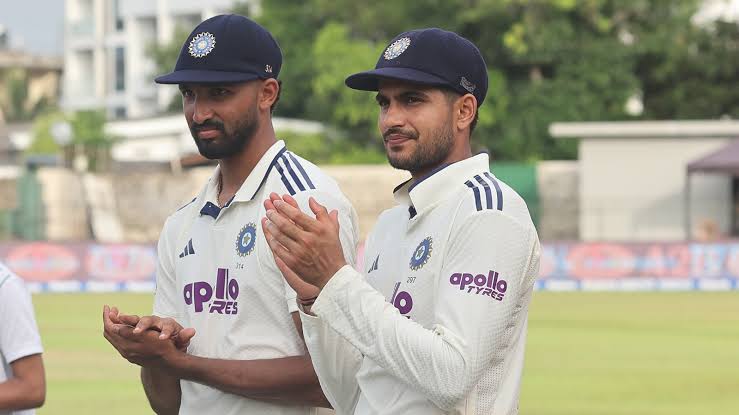
India felt handicapped as they raced against time and the weather to attempt a 2-0 sweep in Sri Lanka, with only four lbws and two bowled dismissals to the spinners. They had to eventually live with a 1-0 series win even after they risked enforcing a follow-on, a decision India's captain Shubman Gill doesn't regret because when they did make the call, they had no idea they would get uninterrupted play on the final day of a series that has been consistently affected by rain.
In a last-ditch effort to secure a result that could keep them in contention for the World Test Championship final, India bowled 243.4 overs consecutively. However, the SSC pitch didn't deteriorate as much as expected.
With uneven bounce, the spinners were unable to work, and when the ball turned and bounced, it was too much of a threat to the stumps. If batters applied themselves and didn't look to score runs, they could keep playing the straight line and let the ones that turn miss their edge. India began the final day only 16 behind and needing four wickets to get cracking with the chase, but when the teams shook hands with only 17 overs unbowled, India had added only three wickets to their tally, none of them lbw or bowled.
Gill stated, "They played quite well." "Typically, lbw and bowled are not completely out of the game on days four and five. The bouncing balls moved slowly and bounced quite high. Therefore, catches around the wicket are the only method of dismissal available to batters who are playing defensively.
"We attacked a lot in such a situation, but we were also put under some pressure. After that, we had to slightly pull them back. However, I believe the pitch simply slowed down. The wickets were not even in play, but it's not like the ball didn't turn. As a batter when you know these two mode of dismissals are not in play, batting gets a little easier especially when you are not looking to score runs.
"We made every effort. They also performed admirably. It's not like the pitch was completely flat. Therefore, they ought to be commended for their excellent play. We created opportunities and momentum on day four; perhaps the outcome would have been different if we had taken one or more wickets.
This is the second time that Gill has enforced a follow-on in his short captaincy career. The first one was against the West Indies in Delhi, when the weather was fine. There they ended up bowling 119 overs in the second innings, and had to come back on the final day to chase down 121 runs. Gill responded that this call has not backfired when asked if the "backfiring" of both subsequent calls will make him more circumspect the next time he has the chance. He made no reference to Delhi.
Gill stated, "I wouldn't say it has backfired here." "We lost about 70 overs on the first four days so we had to keep that in mind. The amount of cricket played on days four and five was unknown to us. We also desired to take that chance. The question was whether we should wait for one-and-a-half sessions on day four and assign them approximately 400 or require them to continue and pursue approximately 100 if necessary. We felt more at ease pursuing because we could do it according to the remaining time.
"You would have asked us again why we didn't enforce the follow-on when you know how much rain has been around if we hadn't enforced the follow-on and if it had rained. All of this is past tense. In that circumstance, you must make the best decision you can at that moment. It did not appear to backfire. They performed extremely well. Our luck was not always on our side."
"We stand a pretty good chance of being accepted into the WTC. I think we'll be in a good position to qualify for the final if you play well in the New Zealand series, and then hopefully by the time the Australia series comes around and we just have to win the series, I think we'll be in a good position to qualify."