
Latest News
India vs New Zealand: Morkel Urges Bowlers to Stay Patient in Christchurch
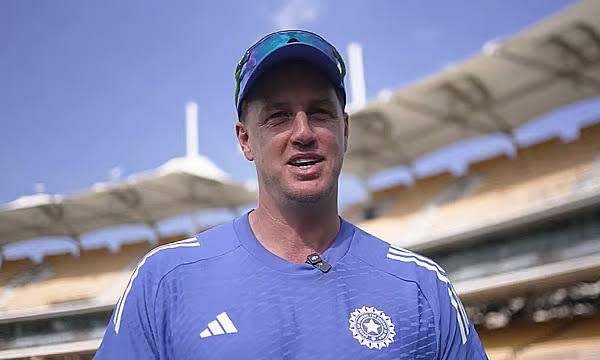
As India prepares for the second and final Test against New Zealand in Christchurch, their bowling coach, Morne Morkel, has urged his team to avoid playing with "desperation" in their matches. India's chances of making the World Test Championship (WTC) final would remain alive with a victory, but Morkel urged his team to "block out the outside noise" and take the game one session at a time.
"First of all, desperation is one thing that we as a team need to understand very well,” Morkel said. “I don't like the word "desperation" because it implies that the guys will try too hard and miss their lengths when they go out. So for me, it is important going into this next week that we go back and block out the outside noise.
“I tell you what, all these guys want to play in that [WTC] final, and they will give everything possible to make it. But realistically, if we are honest about it, it is going to be a challenge. We can't get caught up in the things we need to do after every bad session. We just need to focus on playing our best cricket, coming up with solutions, and from there take it forward. We will talk a lot about that, breaking it up session by session and focusing on how we can play our best cricket."
Morkel said that the Hagley Oval surface for the second Test looked "very green," but he wasn't going to put too much weight on it because he was caught out by a Basin Reserve pitch that looked similar just last week.
Morkel stated, "The pitch from what I have seen looks again very green." “I think it is a longer sort of grass cover they have got there. We'll have to wait and see how it goes. As previously stated, everyone anticipated a fast and bouncy wicket in the previous match, but it was anything but. Again, that is beyond our control. We just need to, with bat and ball tomorrow in the first session, play the conditions we are going to face as best as possible."
On a very flat Wellington surface, India's four-man pace attack lacked bite. In Christchurch, Gurnoor Brar might be the bowler they turn to to add some pace and venom to a ball that seems to be going soft too quickly.
"There is a lot of excitement about him since he has joined the Indian team, with his pace and bounce,” Morkel said while also confirming that all bowlers are available for selection. “I think he is a guy that will be well suited to the conditions here. We will see how it goes.
“Gurnoor has been knocking on the door. He's doing all the right things. However, once more, he has no control over his player selection. He needs to just make sure he's ready when he gets the opportunity. A lot of times, when we're close to that opportunity, as a bowler you can get distracted. My responsibility is to ensure that he is completely prepared whenever he gets the chance—you never know."
Morkel also called for patience with Anshul Kamboj, whose Test career has had a pretty tough start on two very flat pitches. Drafted in as injury cover during the England tour last year, Kamboj made his debut at Old Trafford and returned 1 for 89 from his 18 overs, visibly down on pace and struggling for control. In Wellington, he struck early with the new ball, hit a quick 38 as a nightwatchman, and bowled particularly well on the last day in pretty benign conditions, but he looked down on pace by the end of it and had little to show for his efforts.
"It was not just him; look at the New Zealand side, the speeds on that surface were down,” Morkel said. “You can't judge somebody from his debut Test as well. Playing your first Test involves a lot of emotions and considerations. So let's rather support the guy that is doing a hard job, pulling hard overs for the team. Let's give him a fair chance and let him play a few games first before we can talk. I think it is still very early days to form an opinion about a player at this stage."
India could not bowl New Zealand out on the final day in Wellington, and Morkel put much of that down to a pitch that "lost a lot of pace quite quickly". His lesson for Christchurch was to make the new Kookaburra ball count and to be "braver" with the lengths, even if it meant going for a few runs upfront.
Morkel stated, "The data and the facts, the black and white facts are that the wicket from Wellington lost a lot of pace quite quickly early in the Test match." We quickly needed to reevaluate our plans from that point on. But still, for me, we created a couple of opportunities. You open up certain things, for instance, if Akash [Deep] got the run out or the short leg. As a result, it is up to us as a team to be prepared for that 50/50 chance when the conditions become difficult and the pace slows.
"It does make life a lot more difficult, especially when the surface also loses some pace with the softer ball. That is my experience, playing for 16 years with the Kookaburra ball, that you need to make that new ball count. You need to get the ball in the right place, sometimes be a little braver with your lengths and lines, and even go for a few runs because you can always put in a ring field and get the run rate back when the ball gets soft. That is information that our bowling team and the team need to comprehend, and we need to get better at it. We play with the SG ball in India, where we bring spin into the game. But playing with the Kookaburra ball in these conditions, there is a different pattern that you need to be comfortable with, and you need to sometimes be brave."
Shubman Gill called Mohammed Siraj, India's leading wicket-taker in the current WTC cycle, out of the XI in Wellington, calling him "quite tough" at the toss. Although Morkel trusted the fast bowler, he placed the onus on him to recover.
Morkel commented on Siraj, "I think he is bowling well for me." “He is a world-class bowler for me in terms of the phase he is going through. It's not always easy to make difficult choices and choices to make. I told him, "Listen, let's just strip it back a little bit." in our conversation. Where are we at the moment, what do we need to improve, and where can we get better? Selection is beyond our control.’ And it is all about self-responsibility, of taking that on board."